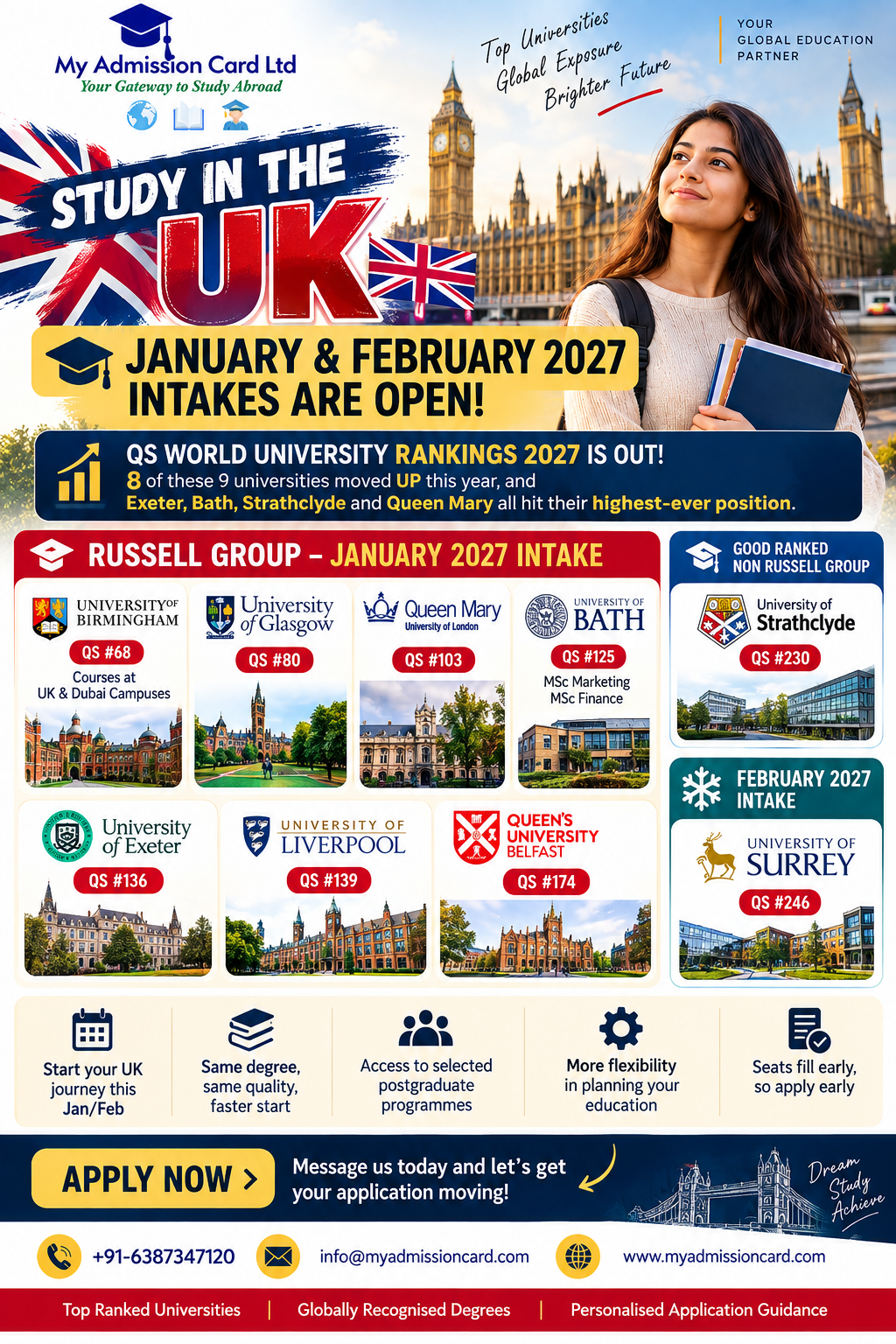

Planning to study abroad but not sure where to begin? This demo post shows how a blog article looks on the My Admission Card website. You can edit or delete it from the admin panel at any time.
1. Choose the right country
Every destination offers something different. The UK is known for shorter degree programmes, while Canada and Australia are popular for their quality of life. Use our UK university comparison or Canada university comparison to shortlist universities by ranking, fees and eligibility.

2. Check eligibility and English requirements
Most universities look at your Class 12 or bachelor’s marks and an English test score such as IELTS. Requirements differ by course, so always confirm on the official university page.
- Academic transcripts and mark sheets
- English test score (IELTS / PTE / TOEFL)
- Statement of Purpose (SOP)
- Letters of recommendation
- Passport and financial documents
3. Apply for scholarships early
Many partner universities offer scholarships of up to £10000. Applying early gives you the best chance. Tip: keep your documents ready before the intake opens.

“Start early, compare carefully, and get expert guidance at every step.”
4. Get free counselling
Not sure which university fits your profile? Book a free counselling session with our team and we will guide you through admission, scholarships and visa filing.